Our Events
Please note that all event timings refer to Central European Time (CET).
Filter events by
Algorithmic agency
With Natalie Welfens, Professor for Political Science and Political Sociology at the Center for Critical Computational Studies, University of Frankfurt. The paper is co-authored with Derya Ozkul, Associate Professor and the Co-Director of the Social Theory Centre at the Department of Sociology, University of Warwick.
Online | 3:30-5:00 PM (CET) | If you're interested in participating, please register via the following link: https://forms.gle/fiWMhqwZmEv8mkVc6
Algorithmic agency
This paper proposes the concept of algorithmic agency as a lens for analysing how agency is redistributed in algorithmically mediated border governance. Rather than treating automation as a zero-sum substitution of human judgment by machine decision-making, we conceptualise agency as socio-technical, distributed, and co-produced across heterogeneous actors, infrastructures and practices. Building on critical data studies and STS-inspired scholarship on digital border governance, alongside relational approaches to agency in migration studies, the paper engages interdisciplinary debates on digital and algorithmic agency from the education sciences and intersectional feminist scholarship. These debates foreground actors’ uneven capacities to understand, navigate, and participate in digitally mediated environments. Bringing these literatures into dialogue enables us to complement and move beyond algorithmic fairness or algorithmic violence framings to trace how classifications are enacted, how discretion is redistributed, and how accountability is reconfigured within algorithmic border governance. We propose algorithmic agency as a heuristic concept that recalibrates empirical attention across interconnected phases of algorithmic border governance: the design and piloting of technologies, their use in everyday decision-making, and engagement with their outcomes, including possibilities for contestation and redress. Across these phases, algorithmic agency highlights how designers imagine and inscribe architectures; how algorithms classify, rank, and flag data; how frontline workers translate, contextualise, authorise, or reject algorithmic outputs; and how migrants comply with, anticipate, or contest opaque decisions under conditions of asymmetrical epistemic and institutional power. By centring algorithmic agency, the paper contributes to ongoing debates on digital borders by offering a vocabulary to analyse how power, knowledge, and discretion are reconfigured in algorithmic governance, without reducing agency to either technological determinism or heroic resistance.
E-Border in Africa
With Genius Amaraizu, Ph.D. scholar in Rhetoric, Media, and Publics (Communication Studies) with the Humanity and Technoscience Lab in the School of Communication at Northwestern University, USA.
Online | 3:30-5:00 PM (CET) | Registration form will be made available in due course.
E-Border in Africa
This work examines how people imagine, practice, and experience electronic border technologies in West Africa. This is situated within a rhetorical and historical context of global migration governance, security, and border externalization, as well as a contemporary shift toward smart borders and trade. I explore the framing of digital borders and surveillance infrastructures expanding across Africa as tools of security and migration management. Focusing on Seme, Hillacondji, and Aflao, three international land borders between Nigeria and Ghana, I trace how sociotechnical and political imaginaries legitimize border technologies and entangle media infrastructures with mobility. I use ethnography, critical discourse analysis, and archival research to document digital borders as paradoxical sites of imperial circulation and state legitimacy, revealing the new ways they perpetuate historical patterns of control, disruption, and continuity in shaping African migration experiences.
Between Control and Resistance: Gender, Refuge, and Digital Power in Costa Rica
With Michele Ferris-Dobles, professor and media researcher at the University of Costa Rica.
Online | 3:30-5:00 PM (CET) | Registration form will be available in due course.
“You cannot apply for asylum or refugee status without access to a computer or a phone with an internet connection.” This statement, shared by a migrant woman seeking refuge, captures the paradox of digital dependency that increasingly defines asylum procedures in Costa Rica. For migrant women, access to international protection is mediated through digital platforms that are simultaneously indispensable and exclusionary. While digital technologies are required to claim the right to asylum, they are often inaccessible, unreliable, slow, bureaucratic, and dysfunctional.
This article examines the asylum-seeking process in Costa Rica through a qualitative, decolonial, and feminist approach, drawing on in-depth interviews, focus groups, digital diaries, and the analysis of state digital interfaces. It focuses on how migrant women are pushed to learn, navigate, and depend on digital technologies in their pursuit of refuge. The findings reveal that government digital platforms systematically (dis)empower women by forcing them to engage with complex, inefficient, and opaque bureaucratic systems. These digital processes disproportionately affect women facing intersecting inequalities related to migration status, class, ethnicity, caregiving responsibilities, and exposure to violence.
Based on ethnographic research, the article highlights how migrant women develop collective strategies of care, knowledge-sharing, and resistance to navigate the multiple layers of violence embedded in these digital infrastructures. I argue that dysfunctional, overcomplicated, and bureaucratic digital asylum systems constitute a form of digital violence. Dysfunction is not a technical flaw but a structural mechanism that deepens migrant precarity by restricting access to protection and fundamental rights. Through digitization, state power extends the border regime into the digital realm and the everyday lives of migrant women. State digital platforms and infrastructures for asylum-seeking mask gendered forms of exclusion under narratives of technological progress and efficiency.
Slippery modes of institutional racism in the securitized migration regime in Portugal
With Nina Amelung, Sociologist and Research Fellow at CIES-Iscte, University Institute of Lisbon, and Susana de Sousa Ferreira, Lecturer of International Relations at the Complutense University of Madrid.
To be confirmed | online | 3:30-5:00 PM (CET) | Registration form will be available in due course.
In this paper we engage with contemporary manifestations and practices of institutional racism as part of an increasingly securitized migration management regime in Portugal. We focus on differential legal, bureaucratic, and data management treatments to which some non-citizens are exposed when they want to claim their rights. We aim to attend to the slippery modes of doing differences in society that criminalize and marginalize migrant populations and have multiple racializing effects, thus to the slippery politics of race.
The paper relies on an analysis of interviews conducted with civil society actors, legal and policy documents and media coverage of the migration management and public discourse on migration in Portugal. First, the EU wide turn towards stricter anti-migration and surveillance policies manifested in the New Pact on Migration and Asylum constraints Portugal. Together with national dysfunctional structures of migration bureaucracy this creates a drastic precarious panorama for racialized and marginalized migrants to access their rights. Second, differential legal treatments to define protection, residential status and access to rights across different national population groups adds to the experience of racism of migrants. Third, the criminalization of migration in public discourse driven by the Far Right creates a legitimizing ecology for institutional racism.
Mutation, Invasion, or End of White Man’s Hegemony? Deconstructing Layered Fears in Studying and Filming More-than-Human Co-Mobilities
With Elisa Tullia Bertuzzo, urban ethnographer who experiments with multiple forms of intervention in variegated public spheres, from publishing to exhibiting through curation and activism.
Online | 3:30-5:00 PM (CET) | Registration form will be available in due course.
In the early 2000s, Bangladeshi immigrants started growing vegetables introduced from the native country across Italy. The crops prospered and the demand from Italy's varied migrant communities was so high that some moved to larger-scale production. This launched a cooperation of plans and humans that within a decade, gave shape to Italy’s first generation of independent migrant farmers, to a supply chain now providing consumers in whole Central Europe with a whole new range of fresh “exotic” vegetables at affordable prices, and to "hybrid" rural landscapes. Evolving off the radar, these developments have lacked dedicated study. Rumours of biological “invasion”, attached to the fact that the seeds are introduced from outside the EU, appear to be a main deterrent for research.
Research I have conducted in Italy evidences ill-informed perceptions of risk—for example, crops selected and "domesticated" for hundreds of years are not resistant enough to turn invasive—and a remarkable amnesia for how in the “old continent”, introduced species have improved food security and diets for centuries. During the workshop, "How to Know Migration and Technology Otherwise", I argued that the propensity to embrace the narrative of invasion correlates with fears that crisscross Europe’s discourse on migration, and with the EU's acerbating border regimes and bio-surveillance policies—prescribing, e.g., the coupling of “plants passports” to QR codes for the tracking of (certain) plant species. In the paper I propose for discussion within this Seminar Series, I will elucidate this argument and elaborate on the entangled political and corporate interests that have pushed public investment in border regimes and (bio)surveillance in the past decades. I intend to show how these have not only constructed migration as “out of control”, but also consistently tried to deviate attention from the environmental crises and their major causes, extractivism and capitalism.
The paper is planned for an anthology, edited by Elena Giacomelli and Andrew Baldwin for Bristol University Press, focussing the narratives and visual aesthetics of climate mobilities. As a counterpoint to the manufacturing of state-corporate narratives, in the second part of the paper I will reflect my experiences making the short film MUTABIONTS and presenting it at the 19th Venice Biennale, with special consideration given to the film's lead motivation and challenge. Can we create novel narratives on climate-driven displacement and adaptation focussing hybrid human-plant knowledges? And can this help channel solidarity?
Bordering through technology: Decolonial reflections on EU externalisation and surveillance in Tunisia
With Stephanie Garaglia, PhD student at the Vrije Universiteit Brussel.
Online | 3:30-5:00 PM (CET) | Registration form will be available in due course.
This paper examines Tunisia’s border control efforts, and its expanding use of surveillance technologies, within the broader context of European Union externalisation policies and their implications for migration governance. Drawing on decolonial epistemologies, the paper interrogates how power, knowledge production, and technological practices intersect to shape whose mobility is monitored, restricted, and rendered visible or invisible. Rather than treating surveillance technologies and border control trainings as neutral tools, the analysis situates them within historical continuities of colonial control, geopolitical asymmetries, and unequal partnerships between the EU and Tunisia. Attention is given to the perspectives and lived experiences of those most affected by these systems. The paper reflects on positionality and the ethical challenges of researching surveillance in postcolonial contexts, arguing for more reflexive, situated, and relational approaches. By centring Tunisian experiences and critiques, the paper contributes to ongoing conversations on how migration and technology can be understood otherwise. It ultimately argues that decolonial approaches offer crucial tools for rethinking dominant narratives about innovation, security, and mobility.
Borders between State and Private Companies: Responsibilities for air border management in Brazil
With Lucia Sestokas, PhD candidate in Social Anthropology at the Universidade Estadual de Campinas, Brazil.
Online | 3:30-5:30 (CET) | If you're interested in participating, please register via the following link: https://forms.gle/fiWMhqwZmEv8mkVc6
According to Brazil's Federal Constitution, the State is responsible for "performing maritime, airport, and border police services", and the Federal Police is responsible for "exercising maritime, airport, and border police functions". After submitting access to information requests regarding the use of facial recognition at the Guarulhos International Airport, the Federal Police's official statement indicated that "the Federal Police had no involvement in the contracting of the facial recognition service", suggesting that the information should be requested "directly to the Guarulhos International Airport Concessionaire S.A.", company responsible for operating the airport under a concession valid for 20 years.
Without denying the importance of the nation-state and far from establishing an opposition between "State" and "private companies", this article proposes to investigate the relationships established between state bodies and private companies through the contracting and operation of border control technologies, with a special focus on the air border at Guarulhos International Airport, the largest Brazilian airport. To this end, documents such as responses to requests for access to information, contracts and publications in the Official Gazette of the Union will be analyzed in order to understand how state and non-state bodies relate to each other.
Session cancelled
The previously planned STS-MigTec Circle session of April 30 has been cancelled due to unforeseen circumstances.
Visibility Without Responsibility: Situational Awareness at the Evros Land Border
With Ismini Mathioudaki, postdoctoral researcher on the Infralegalities project at the University of Edinburgh.
Online | 3:30-5:00 PM (CET) | registration form will be available in due course.
This chapter examines how the Evros land border operates as a laboratory for techno-legal border governance and situational awareness, producing a dense “system of systems” that rivals—and in key ways exceeds—maritime surveillance regimes. Drawing on fieldwork conducted in the Evros region (2024–2025), the chapter analyzes the Automated Border Surveillance System (ABSS) as a terrestrial assemblage of towers, radars, thermal sensors, motion detectors, fences, trenches, patrols, and centralized command centers that together generate a high-resolution operational picture. While EU maritime situational awareness is frequently framed through humanitarian Search and Rescue narratives, the Evros border is primarily embedded within logics of deterrence and territorial defense. This divergence shapes how surveillance technologies are deployed, justified, and normalized within a militarized borderscape characterized by extensive monitoring and limited accountability.
The chapter introduces the concept of polychōra to theorize the border’s multi-sited materiality. Polychōra captures the co-operation of “hard” and “digital” sieves including physical infrastructure, sensors, databases, and communication systems, that sort mobility across checkpoints, camps, sensor grids, legal sites, and back-office analytics. Rather than treating border dispersion as immaterial or abstract, the chapter shows how bordering practices are path-dependent: each detection, biometric trace, patrol log, and expulsion leaves material and legal residues that recalibrate subsequent encounters, tightening or loosening the surveillance mesh in ways that are differentially racialized.
Empirically, the analysis traces the ABSS across multiple sites through a multi-sited ethnographic methodology, including interviews with lawyers, border personnel, and refugees; observations near surveillance infrastructure and the Fylakio Reception and Identification Centre; and interviews with actors involved in national coordination in Athens. Conceptually, the chapter argues that situational awareness does not merely represent territory but actively territorializes it, authorizing anticipatory interventions while dispersing responsibility across fragmented institutional actors and jurisdictions. By conceptualizing Evros as a polychōra, the chapter reframes the contemporary land border as an infrastructure of visibility that simultaneously produces opacity, deniability, and uneven exposure to violence.
'We'll cross that bridge when we get there': EU AI policy and the AI literacy gap in AI-supported decision-making on asylum
With Gianmarco Gori, Guest Professor at the Law, Science, Technology and Society (LSTS) Research Group at the Vrije Universiteit Brussel (VUB).
Online | 3:30-5:0 PM (CET) | If you're interested in participating, please register via the following link: https://forms.gle/jdtHgzEdXwd4kjJ26
An increasingly optimistic stance has emerged within policy discourse regarding the potential of AI in the context of international protection procedures (IPPs). AI is framed as a tool for streamlining and accelerating IPPs, curbing authorities’ discretion, and enhancing decisions’ fairness and “accuracy”, understood as the capacity to distinguish “genuine” applicants from mala fide irregular immigrants.
Against this background, the EU AI Act classifies AI systems for evidence reliability assessment and decision-making support in IPPs as high-risk products. In the language of product legislation, they may circulate on the EU market if conforming to the AI Act’s requirements. Within this framework, the AI literacy requirement represents a key mediator between product and human rights logics: AI operators must develop the “knowledge, skills, and understanding” necessary to prevent AI from causing harm in situated contexts of deployment.
Yet, as the AI Act approaches application, operators’ AI literacy needs have remained largely unmet due to the lack of context-specific guidance and learning frameworks for high-risk scenarios such as IPPs. With the recent Digital Omnibus on AI, the Commission has answered this challenge with a policy turnaround, proposing to lift operators’ AI literacy obligations.
The paper argues that the parable of AI literacy foregrounds critical issues at the intersection of EU AI and asylum governance: the techno-solutionism underpinning the AI-as-a-product regulatory paradigm; the lack of engagement with how knowledge is produced and epistemic authority enacted in IPPs; and the failure to account for how AI mediation of these practices may further entrench applicants’ vulnerabilities. Nonetheless, the paper contends that exploring what “skills, knowledge, and understanding” would be necessary to ensure asylum seekers’ protection in concrete AI-supported decision-making settings constitutes a productive exercise: namely, it can help map the sites of discretionary judgment produced throughout AI development and deployment, make visible the translation, alignment, and formalisation work of practitioners, and understand their potential to deepen existing asymmetries in IPPs.
Curating data: Trust and care in multi-level information systems
Online with Matthias Leese, Assistant Professor at the Department of Humanities, Social and Political Sciences, ETH Zürich.
“Good data, they are trustworthy, first of all. They are clear and… It’s data that I can, yes, the trustworthiness, that is the most important thing for data, I think.” This is how a case officer working at a national level center for international police cooperation in a European country, during an interview, framed the most important requirement for information stored in the Schengen Information System (SIS). The SIS is Europe’s oldest and largest international security database. It pools and redistributes more than 90 million records from 29 countries relevant for law enforcement, border control and asylum, as well as judicial cooperation.
This book empirically investigates the question how operational and technical experts build trust throughout the multi-level digital knowledge infrastructure of the SIS. Building on a qualitative methodological framework, it empirically substantiates the care work that is a central, yet underacknowledged aspect in increasingly data-driven and algorithmically mediated international security contexts. Building on recent problematizations of care work in digital environments, the analysis retraces how security professionals at the national and EU level curate SIS data in different ways.
Understanding the everyday knowledge functions of multi-level information systems through the notions of trust and care has major implications for the study of international politics. As regional and global data collection schemes form the backbone of evidence-based policymaking and interventions, the work of the back office experts responsible for data quality and data governance has largely been silenced. Yet, as this book shows, they carry out key tasks that underpin the ways in which state and private actors perceive the world and act upon it.
Use the form here to sign up for the event: https://forms.gle/w5jPwQ77UvJjfCBQ8
MigTec/Datamig Circle: Migration Data Matters. A Keyword Approach to the Datafication of Migration and Border Control (II)
Register here: https://forms.gle/AE74UmvRJugWWfb1A
This session continues the collaboration with the COST Action “Data Matters: Sociotechnical Challenges of European Migration and Border Control (DATAMIG)”.
DATAMIG is an interdisciplinary network aimed at fostering research by bridging spheres of discourse and public intervention surrounding data issues in European migration and border control.
DATAMIG Working Group 1 is currently working on a collaborative book titled "Migration Data Matters: A Keyword Approach to the Datafication of Migration and Border Control". In this project, scholars have come together to develop an inventory of critical scholarship through keyword-based chapters. These keywords, written by multi-author teams, highlight significant themes related to the digitalisation and datafication of migration, mobilities, and borders.
In the first Circle of the year, we will focus on the following chapters:
Imaginaries / Imagining, by Philipp Seuferling, Koen Leurs, Laura Candidatu, Nina Khamsy, and Zlatan Krajina
This keyword entry explores the conceptual powers of imaginaries, understood as an active, socio-material practice of imagining, in relation to datafication of migration. We discuss how socio-technical assemblages in the realm of migration are bound up with the work of imagination, and how seemingly non-material practices of imagining pasts, presents, and futures around technology in migration control are enwrapped with and shape material enactments of power. We understand imaginaries as the tension-rich, yet productive space between the representational and the material – between the signifier and the signified, a structure of feeling that is discursively articulated yet materially bound. By discussing the philosophical underpinnings of imagination as a social practice connected to hegemonies and their contestations (such as Taylor, Lacan, Strauss, Anderson, Castoriadis, Hall), we introduce how this conceptual history can be made productive to critically study contemporary datafication of mobility regimes – speaking to a moment where increased technologisation of border regimes leads to new power hierarchies over imagining as a social practice, e.g. when data itself is used to imagine migration and its futures. We then unpack the analytical capacities of imaginaries as a keyword on (loosely) three interrelated scales.
On a macro-level, investigating the power of imagination in migration exposes the long history of how mobilities over spaces and territories have been imagined in particular ways in Western history, leading to technologies of control and discipline being imagined and shaped in particular ways. In contrast, there have always been other imaginaries (and technological practices) of people, territory and mobility produced from the margins, e.g. in Indigenous theories, or among travellers and Roma people. On a meso-level, we address how imaginaries manifest on an institutional level, in policies, patents for technologies, algorithmic registers, or states. States, polities and institutions are characterised by certain structures of feeling (Williams, 1970) that provide imagined frameworks for legitimising ways of doing, designing and building technologies of migration regimes. Thirdly, imaginaries can be traced on the micro-level. Drawing on ethnographic insights on everyday experiences of people on the move in relation to border technologies, demonstrates the inherent struggles and frictions of imaginaries. Perceptions from below, aspirations and artistic contestations demonstrate the inherent power imbalances and injustices in who gets to imagine mobilities, and what potential lies in subaltern imaginaries.
In conclusion, this entry explores the potential of “imaginaries” as a keyword to critically capture a socio-material practice that gives meaning to materialisations of the border and its technologies. Imaginaries are never fixed, and re-imagining can be a process of hope for liberatory futures. Yet, any act of imagination is dependent on positions of power, hence we ultimately ask what imagining from below can look like, and how new actors enter the scene of imagining migration, e.g. through algorithmic forecasting.
Body, by Moé Suzuki and Nishant Shah
The bodies of migrants are a key to the datafication of borders. Actors seeking to control migrants place increasing faith and investment into technologies to capture, quantify, calculate, and deter (certain) bodies on the move. Bodies become the objects of control, as border technologies seek to detect and control movement. In such endeavours, bodies are rendered as a source of information that is turned into data, for example through biometric technologies (Amoore 2006; van der Ploeg and Sprenkels 2011; Quinan and Hunt 2022). Treating the body as a source of information entails a performance of subjecthood and bodies in specific ways. For example, bodies pose as something that speaks the truth about a person (e.g. Aas 2006), reducing subjects to their bodies.
Within critical studies of the datafication of migration ,this warrants critical examination of ‘the body’ and how it becomes an object of control as well as a vehicle for control. In this entry, we draw particularly on feminist and queer scholarship on technology, embodiment, and migration to investigate the relationship between the body and datafication. We organise the entry around six statements about datafication and the body: 1) Digital data is a form of prediction rather than description, 2) Embodied data realities need measures beyond scale, 3) There is no data without bodies, 4) Data and the body are both subject to manipulation, 5) Data is dated (e.g. Madörin 2022), and 6) The body is leaky (e.g. Chun 2016). More broadly, the six statements are united around the idea that the idea of the body as primarily a source of information and as something that can be turned into data is rooted in thought systems shaped by the colonialism and cartesian dualism characterising modern science and politics. Consequently, the ways in which the body is central to datafication of migration control, is rooted in racism and in a culture of mistrust towards migrants.
Political economy of datafication of migration, by Clemens Binder, Sara Bellezza, Olga Gheorghiev, Sarah Perret, Zuzana Uhde
Political economy as a keyword essentially addresses two aspects. First, it argues that we need to understand datafication of migration control as embedded in wider economic structures of mobility (De Haas et al., 2019). In that sense, datafication enables categorizations of mobility that are often derived along economic lines, such as tourists, labour migration or displacement (Crawley & Skleparis, 2018). Datafication thus should be understood as a result of considerations about political economies and how data can contribute to mobility inequalities that rest upon notions of income and class (Anderson, 2013). Second, the keyword focuses on economic aspects of the datafication, in particular with emerging private actors at the level of controlling mobility and borders through data infrastructures (Bigo, 2022; Zedner & Bosworth, 2022). This involves particularly the shifts in power and agency in shaping the infrastructures of datafied mobility control through an introduction of new actors and emerging logics of marketization (Hoijtink, 2014).
Discussing the political economy of datafication hence means to interrogate how databases and datafied infrastructures enable a specific field of actors that shape these forms of control according to market logic. Looking both at levels of technological development (Binder, 2024; Perret, 2024) and maintenance or expansion of the databases (Glouftsios, 2021; Leese & Ugolini, 2024), this keyword addresses the actors at the play as well as changes in agency and practices engendered through the emergence of economic logics. This keyword thus focuses on public-private interactions in the context of datafication with a specific focus on the logics of marketization and economic profitability in order to understand how they shape datafication. In this sense, this keyword seeks to provide a novel perspective on data and mobility control which highlights the economic structures at play in datafied regimes of mobility control. Thus it also advances debates on public-private interaction, as it draws together debates about agency of private companies with wider political and economical considerations. Hence, this keyword could open future research avenues that highlight economic aspects of datafication and also problematize those in terms of their productiveness of inequalities.
MigTec/Datamig Circle: Migration Data Matters. A Keyword Approach to the Datafication of Migration and Border Control (I)
This session brings a fresh collaboration with the COST Action “Data Matters: Sociotechnical Challenges of European Migration and Border Control (DATAMIG)”. DATAMIG is an interdisciplinary network aimed at fostering research by bridging spheres of discourse and public intervention surrounding data issues in European migration and border control.
DATAMIG Working Group 1 is currently working on a collaborative book titled "Migration Data Matters: A Keyword Approach to the Datafication of Migration and Border Control". In this project, scholars have come together to develop an inventory of critical scholarship through keyword-based chapters. These keywords, written by multi-author teams, highlight significant themes related to the digitalisation and datafication of migration, mobilities, and borders.
In our upcoming Circle, we will focus on the following chapters:
“Technologies on the Move” by Andrés Pereira and Sara Bellezza
With technologies on the move, we propose a concept that refers to the assemblage of ideas, techniques, objects, experts, legal frameworks, practices and models of migration control that accompany the circulation of technologies in multi-directional ways. Technologies on the move comprises a research agenda that includes externalization and circulation of bordering technologies from the centers to the periphery, but also contests this unidirectional viewpoint by putting emphasis on the circularity of the movement of technologies, from the peripheries to the centers. In line with the autonomy of migration, technologies on the move considers practices of appropriation and strategic interaction with technologies to facilitate movement against global (im)mobility regimes. As such, the movement of technologies is inextricably linked to the movement of migration across borders: the circulation of technologies is preceded by the movement and the strategic use of technologies by migrants, but also furthers movement when border deterrence mechanisms threaten to hinder circular mobility. This keyword intends to constitute new decentered views on the contested circulation of migratory control by investigating externalization processes of bordering technologies, south-south cooperations, the constitution of regional and global technological zones, the diffusion and hybridization of technologies and legal frameworks through international organizations and the export and import or expansion of techno-humanitarian regimes, for example for the extraction of data. From above to below, from the peripheries to the centers, and vice versa, technologies on the move is an approach that highlights the colonial and unequal power relations across the borders.
“Accountability” by Alice Fill, Ismini Mathioudaki, and Annalisa Meloni
Accountability is a concept that integrates various disciplines, including legal studies, international relations, and philosophy. At its core, it can be understood as a relationship among actors. The process of datafication in migration and border management is profoundly altering how this relationship is conceived, mediated, and connected to justice. This entry proposes utilising accountability as a lens to examine how responsibilities arising from both positive and negative obligations in the field of migration are becoming blurred and negotiated, encompassing both legal and extra-legal concerns. In particular, this analysis begins by mapping accountability voids and frictions that emerge from the digitalisation of migration and border governance, within, at, and before the EU borders. Specifically, it highlights how claims of accountability are shifting among human and non-human actors, national and international entities, agencies, and between the EU and third countries. This shift results in the disentanglement of violations or decisions from the responsibility for them.
Accountability in the field of European migration, asylum, and border control policies is a pressing issue, particularly in the context of the many tragedies involving migrants who die attempting to reach the European border. While certain sections of civil society and scholarship have extensively articulated and documented how the EU and its Member States are implicated in this reality, the prevailing political discourse blames smugglers, criminalised NGOs, migrants themselves, and hostile third countries. Moreover, externalisation policies, accelerated border procedures, and deterrence mechanisms are specifically designed to evade accountability and jurisdiction under European and international human rights law, largely deflecting responsibilities for violations. To discuss these issues, three exemplary cases are presented: the automation of decision-making in migration and asylum procedures, the interoperability among EU databases and other information-sharing schemes, and the consequences of datafication in a context of increasing externalisation, characterised by a pre-emptive approach. Datafication in the field of migration has the potential to further degrade the rule of law in this domain, leading to serious and systematic breaches of the fundamental rights of migrants that are non-imputable or unaddressed. This situation partly stems from the vulnerable position of migrants in law, reflecting their categorisation as ‘other’, which urgently needs to be rethought if human rights are to be taken seriously.
“Data Protection” by Iwan Oostrom, Rocco Bellanova, and Gloria Gonzalez Fuster
Amidst the rapid evolution of personal data protection law, particularly within the European Union (EU), data protection has become key to the shaping and framing of the increasingly data-driven border and migration policies and technologies, as well as their associated controversies and contestations. In this entry, we shed light on the meaning of data protection and the ways in which it may intertwine with borders and migration. First, we outline data protection’s historical development, from its emergence as a concern in 1960s Europe, to its elevation to an EU fundamental right separated from privacy in 2000, followed by the more recent advancements of data protection law in Europe and beyond. While offering this account, we reflect on the substance of data protection, considering its complex, evolving and contested relationship to the right to the protection of private life. This is followed by a brief overview of the key elements of the EU’s data protection governance framework. We relay some of the opportunities, challenges, and criticism that have been voiced over the capacity of data protection and its governance to safeguard the rights of people on the move. Furthermore, we introduce several key data protection principles, such as lawfulness,fairness and transparency, purpose limitation, and accuracy, while offering accounts of how these principles have been mobilised in migration-related court cases, academic research and civil society campaigns. Finally, this entry reflects on how data protection, as both an object of research and an epistemic tool, may offer novel research avenues for critical border, migration and security studies.
Register here: https://forms.gle/aSMjAqNSxWqzTXj49
STS-MigTec Circle – Surveillance evangelism: Private technology companies and the future of crimmigration control in Africa
Online with Samuel Singler, Lecturer in Criminology in the Department of Sociology and Criminology, University of Essex.
This paper adds an ideological dimension to the burgeoning literature examining how new digital tools developed by private technology companies are reshaping the relationship between border control and criminal justice. By analyzing private technology companies’ promotional materials, public events, presentations to state actors, and technical documentation in the African contexts, I address the question: what is the role of private technology companies in constructing future visions of border control, and to what extent do these future visions involve a merging of border control with criminal justice practices in Africa?
Although references to a biometric ‘imaginary’ or ‘ideal’ are quickly becoming commonplace in the critical literature on digital border controls, researchers have spent less time inquiring into where such imaginaries come from, and which actors create and shape these visions of the future. I argue that these companies can be productively conceptualized as ‘surveillance evangelists’ akin to the ‘moral entrepreneurs’ familiar to critical criminologists. The notion of surveillance evangelism explains how technical actors deal with the potential dissonance between utopian visions of a future biometric world on one hand, and the reality of technical failures, messy practices, and political challenges to these technologies on the other hand. Moreover, the term highlights how these companies do not only attempt to convince potential customers of the desirability of their already existing products. As evangelists, these companies also attempt to convert public authorities into believers of a particular biometric future by pre-empting potential challenges and closing off alternative visions of future surveillance practices.
Sign up for this online event using the form here: https://forms.gle/dtC1oxJG3hxB1KD17
COST Action (CA22135) Workshop: Data Matters
Data Matters
Sociotechnical Challenges of European Migration and Border Control
co-organized by the COST Action Working Group 1 “Inventory” Coordination Group and the Department of Media and Culture Studies, Utrecht University (on site and online)
Please find the full program including abstracts here.
Tuesday, 9 April 2024
14:30-16:30 Public Panel
DATAMIG Panel: Part I
Moderation: Vasilis Argyriou & Veronika Nagy
Presentations: Philipp Seuferling, Leonie Jegen, Noemi Mena Montes, Ivan Josipovic, Salah El-Kahil
DATAMIG PART II
Moderation: Annalisa Meloni & Zuzana Uhde
Presentations: Stephan Scheel, Laura Candidatu, Rocco Bellanova & Silvan Pollozek & Jan-Hendrik Passoth, Sifka Etlar Frederiksen, Evelien Brouwer & Yiran Yang & Frederik Borgesius Zuiderveen & Pascal Beckers
16:30-16:45 Coffee Break
16:45-18:00 Plenary roundtable
‘Nothing About Us Without Us’. Participatory Approaches to Migration and Surveillance. Conversations with the Migration and Technology Monitor
Moderation: Jasper van der Kist & Koen Leurs
Speakers: Petra Molnar, Wael Qarssifi, Florian Schmitz,
18:00-19:00 Drinks
Wednesday, 10 April 2024: COST Action DATAMIG Writing WORKSHOP
9:00-10:45 Writing Sprint keywords 1
- Introduction and onboarding
- Revision of keywords and clusters
- Literature research for keywords
10:45-11:00 Coffee Break
11:00-13:00 Writing Sprint keywords 2
- Writing session keywords in small groups
- Open questions and next steps
13:00-13:15 Wrap up, farewell
DATAMIG Coordination Group: Vasilis Argyriou, Alice Fill, Koen Leurs, Annalisa Meloni, Veronika Nagy, Silvan Pollozek, Philipp Seuferling, Zuzana Uhde
Local Organizer: Koen Leurs
STS-MigTec Annual Workshop 2024
Data Matters in Migration and Border Control
Co-organized with the Department of Media and Culture Studies, Utrecht University (on site and online)
Please find the full program including abstracts here.
Monday, 8 April 2024
09:00-09:15 Morning Coffee 09:15-09:30 Welcome
09:30-11:30 First Session
Panel 1: Open Panel: Biometric and digital identification
Moderation: Silvan Pollozek & Koen Leurs
Presentations: Matthias Wienroth & Rafaela Granja, Daniel Leix Palumbo, Kelly Bescherer, William Allen
Panel 2: The technopolitics of digital crimmigration control: Expertise, experimentation, and democratic politics
Moderation: Samuel Singler, Nina Amelung, Sanja Milivojevic
Presentations: Nina Khamsy, Jonathan Buchmann, Dawit Haile, Travis Van Isacker & Bridget Anderson & Sanja Milivojevic
11:30-12:45 Lunch Break
12:45-14:45 Second Session
Panel 3: Being Political? Navigating criticality and dissent with(in) and beyond STS
Moderation: Jasper van der Kist & Stephan Scheel
Presentations: Fredy Mora Gámez, Tasniem Anwar, Travis van Isacker & William Walters, Maurice Stierl
Panel 4: The technopolitics of digital crimmigration control: Expertise, experimentation, and democratic politics II
Moderation: Samuel Singler, Nina Amelung, Sanja Milivojevic
Presentations: Nina Amelung, Alizée Dauchy, Ismini-Nikoleta Mathioudaki, Andrés Pereira
14:45-15:00 Coffee Break
15:00-17:00 Third Session
Panel 5: Open Panel Control and Contestation
Moderation: Olga Usachova & Matthias Wienroth
Presentations: Lidia Kuzemska, Marie Godin, Sara Bellezza, Luděk Stavinoha, Romm Lewkowicz
Panel 6: Open Panel Datafied Migration and Border Control
Moderation: Kinan Alajak & Ivan Josipovic
Presentations: Connie Hodgkinson Lahiff, Georgios Glouftsios, Keren Weitzberg & Isadora Dullaert & Emrys Schoemaker & Aaron Martin, Vasilis Argyriou
17:00-17:15 Coffee Break
17:15-18:45 Open Space: Scholars share recent research output, projects, and future plans
Moderation: Olga Usachova & Koen Leurs
19:00 Dinner
Tuesday, 9 April 2024
09:00-11:00 First Session
Panel 7: Legal Challenges in Datafying EU Migration, Asylum and Border Control
Moderation: Niovi Vavoula & Jasper van der Kist
Presentations: Mirjam Twigt, Jo Ann Oravec, Mariana Gkliati, Gavin Sullivan & Dimitri Van Den Meerssche, Frida Alizadeh, Abla Triki
Panel 8: Open-source and other digital evidence in the governance of asylum and criminal justice in the context of war and persecution
Moderation: Maarten Bolhuis & Ivan Josipovic
Presentations: Rianne Dekker & Kinan Alajak & Koen Leurs, Isabella Regan, Henning Lahmann, Maarten Bolhuis & Tanja van Veldhuizen, Klaas van Dijken
11:00-11:15 Coffee Break
11:15-13:15 Second Session
Panel 9: Legal Challenges in Datafying EU Migration, Asylum and Border Control II
Moderation: Niovi Vavoula, Jasper van der Kist
Presentations: Alexandra Karaiskou, Marcin Rojszczak, Derya Ozkul, Juliane Beck, Grigore M. Havârneanu & Kacper Kubrak, Matija Kontak
Panel 10: Get To Know the STS-MigTec Network and the COST Action Datamig Moderation: Nina Amelung, Silvan Pollozek
13:15-14:30 Lunch Break
Call for Papers - STS-MIGTEC Workshop 2024: Data Matters in Migration and Border Control
The research network STS-MIGTEC and Utrecht University’s focus area Governing the Digital Society with its special interest group Digital Migration invite contributions at the intersection of science and technology studies (STS), critical migration, security, surveillance and border studies, and related disciplines.
You can submit your papers either to specific thematic panels or to open panels (see detailed cfp).
Please include the title, abstract (up to 250 words), and authors of the paper, incl. affiliations and short bios (75 words). Specify if you propose your paper to one of the available thematic panels or to open panels and if you would like to participate on-site. The deadline for submissions is 14 December 2023.
Bridging the empirical gap between discourses on border control and technology capabilities on the ground: (Beyond) the case of Niger
Online with Alizée Dauchy, Post-doctoral Researcher in International Studies, University of Trento.
In the context of the European Union Emergency Trust Fund for Africa, Niger has been actively committed to migration control in West Africa. To enable better comprehension of the making of security in Niger, the article “Dreaming Biometrics” studies the implementation of three biometric system (Wapis, Midas and Bims) under the EU Trust Fund by international agencies (Interpol, the International Organization for Migration, and the UNHCR) and national actors. Drawing on in-depth interviews, observation at the border and anthropology of aid studies, I focus on heterogeneous actors’ situated discourses and practices to demonstrate that they do not share the same dream about biometrics.
The article, as a first attempt to fill the “empirical gap between discourse of biometric capability and operational realities” (Singler 2021), outlines the need to move away from the rhetoric of regional and international organisations, states and private actors on digital innovation and to look at how technology is (not) implemented at the border. Studying the materialities of the borderscape means to focus on interaction more than properties as a methodological starting point for the research (Fischer 2018). By doing so, this presentation outlines the importance of the social and geographical contexts in which security devices are deployed and how it shapes or constrains the deployment of these systems and invites to escape also from a certain techno-hype or techno determinism in the Global South.
Sign up for the event using the form here: https://forms.gle/TZZSJmvRP34N42uPA
Informality encounters border technology: Oxymoron or ally?
Online with Valeria Ferraris, Associate Professor of Sociology of Law and Deviance, University of Turin.
The study of informality has deep roots in Southern theory, encompassing various disciplines from law (Boaventura de Sousa Santos, 1987) to urban studies (De Soto, 1989) and urban economy (Broomley, 2000). These studies emphasize informality's multifaceted nature, encompassing diverse aspects such as informal practices, the absence of planning, and more. They also highlight a range of causes, actors, and motivations associated with informality. Recent developments in EU migration policy have seen an increase in the reliance on technology, accompanied by a significant degree of informality. This includes non-legal actions or undisclosed agreements with non-EU countries. This presentation aims to discuss the intersection of informality within border control and technology, using Italy as a case study. Italy's normative order in migration control policy is rooted in administrative rules and obscure executive powers that complement informal practices in managing and controlling migration.
Sign up for the event using the form here: https://forms.gle/UnjwqABZtbU9TPCF6
STS-MigTec Circle - Dispossession Through (Dys)functional Data Infrastructure; Technology as a Tool of Immigration Policy
Online with Philippa Metcalfe, ESRC Postdoctoral Fellow at the Department of Politics and International Studies, University of Warwick.
Drawing on ethnographic data from fieldwork in the UK and Greece, Philippa conceptualises (dys)functional data infrastructures as a tool through which opaque policy outcomes are achieved; used to dispossess illegalised migrants of basic rights after they have crossed the external borders of Europe, whilst also becoming a means of legitimising ongoing investment in technological systems which serve to benefit private interests. Through doing so, she explores what is at stake when we discuss the harms of datafied borders. She discusses the use of Skype in Greece, which was in operation until 2021 and presented as a practical tool for registering asylum claims, as well as the MESH data infrastructure used in the British healthcare system where personal data are shared between the NHS and the Home Office, presented as a means of enforcing chargeability checks. In both instances, the technological infrastructure seemingly failed to fulfil the stated policy purpose of offering a practical way to apply for asylum or recouping healthcare costs. Instead, in Greece, many found the Skype system became a barrier to accessing asylum, and in the UK, people became wary of accessing healthcare over fears of becoming visible to the Home Office and consequently detained. Whilst borders are themselves a “tool in a global order predicated on colonial and racial forms of (dis)possession” (Brito 2023, 10), through focusing on the exclusionary and colonial logics that underpin asylum and immigration policies in Europe (El-Enany 2020; Squire 2009), Philippa draws on a framework of dispossession to conceptualise how datafication “creates the conditions for a new apparatus of racialised dispossession” (Gray 2023, 3) through (dys)functional technological systems. She argues that the (dys)functionality of these infrastructures is intrinsic to fulfilling harmful policies in a way that distances the state from enacting violence, thus avoiding a level of public scrutiny. Finally, Philippa argues that this simultaneously legitimises further development of these technologies, where the use of datafied controls is never questioned, but rather corporate actors position themselves as experts who can fettle and fine tune (dys)functional technological systems.
Sign up for the event using the form here: https://forms.gle/1MEWHgpur66zEFEB6
MULTIMODAL INTERVENTIONS. critical and creative engagements with migration, borders and violence - hybrid
Roundtable: Darcy Alexandra (University of Bern), Andrew Gilbert (Humboldt-Universität zu Berlin), Jonathan Austin (University of Copenhagen)
Inspired by emergent discussions in Science and Technology Studies (STS) on experimental collaborations (Estalella and Criado 2018; Lippert and Mewes 2021), and making and doing (Downey and Zuiderent-Jerak 2021), this roundtable will focus on alternative co-creative research and dissemination strategies that have the potential to reach beyond the walls of academia and intervene in broader public discussions. Our quest for multi-modal collaborations and interventions has the primary scope to widen the reach of Migration and Border Studies scholarship and to facilitate knowledge production with societal partners such as media makers, artists and engagement with wider publics.
Moderation: Nina Amelung (ICS-ULisboa)
Organisation: Pedro F. Neto and Nina Amelung (ICS-ULisboa) and Ildikó Z. Plájás (University of Amsterdam)
Hybrid event. For attending online contact migtec.website@gmail.com by November 26, 2023.
STS-MigTec Circle - The Walls Have Eyes: Techno-Racism and Politics of Exclusion at the Border
Online with Petra Molnar, co-creator of the Migration and Tech Monitor, Associate Director of the Refugee Law Lab at York University, and Faculty Associate at the Berkman Klein Centre for Internet & Society at Harvard University.
Technological experiments play up an ‘Us’ vs ‘Them’ mentality at the centre of migration management policy. Border spaces serve as testing grounds for new technologies, places where regulation is deliberately limited and where an ‘anything goes’ frontier attitude informs the development and deployment of surveillance at the expense of people’s lives. Unbridled techno-solutionism and migration surveillance exacerbates deterrence mechanisms already so deeply embedded in the global migration management strategy, like at the Polish Belarusian border, making things as difficult for people to set an example and to prevent others from coming. This paper is based on ethnographic on-the-ground research at various borders, drawing on vignettes from Poland/Belarus, the Aegean Islands of Greece, and the US-Mexico border. Coupled with a human rights-based approach to analysing the far-reaching human impacts of surveillance and automation at the border, it argues that an increasingly global and lucrative panopticon of migration control exacerbates discrimination and obfuscates responsibility and liability through the development and deployment of increasingly hardline border technologies, once again reifying the vast power differentials between those who move and those who make decisions about how to ‘manage’ migration.
Use the form here to sign up for the event: https://forms.gle/gjpdg4KQwozX6SVg8

STS-MigTec Circle "Emigration and Immigration in Portugal" with João Carvalho (CIES, ISCTE-IUL)
Online with João Carvalho, Guest Principal Investigator at CIES (ISCTE-IUL), whose research interests are centred on the fields of comparative politics, international migration policy, and far-right parties in particular. In terms of scientific research methods, the research carried out by him employs qualitative or mixed research strategies, with particular emphasis on qualitative comparative analyses (QCA).
"Emigration and Immigration in Portugal"
This chapter will explore the structural factors that support the migration networks and the policies deployed by the Portuguese government regarding these social phenomena from the twentieth century onward. Remarkably, a large segment of Portuguese emigration was irregular due to the restrictions imposed by the Portuguese state until 1974. Likewise, immigration into national territory for labour purposes has evolved mostly through irregular means, in a context of ineffective channels for labour immigration. While the Portuguese state came close to promoting an active emigration policy in the 2010s, immigration control adopted a laissez- faire approach in the early 2000s in order to attain endogenous political objectives. From a comparative perspective, Portugal has been recurrently categorized as conforming to a Southern European model of emigration and immigration (Peixoto et al., 2012; King, 2019). However, this chapter suggests that Portugal constitutes an exceptional case, seeing as its net migration is quite distinct from that of its Mediterranean counterparts.
To achieve the proposed objectives, the first part of this chapter reviews the development of emigration. Starting from the fifteenth century, the analysis will examine the four waves of Portuguese emigration, the origin and destination of outflows, the sociodemographic profile of the most recently departed Portuguese citizens, and the public policies related to this social phenomenon. The second part of this chapter examines the evolution of immigration into Portugal from the 1970s onwards and the Portuguese state’s approaches to immigration control, immigrant integration, and immigrants’ access to Portuguese citizenship. Drawing on a comparative approach, the politicization of immigration in Portugal between 1995 and 2014 will also be analysed to highlight the divergences between Portugal and its European counterparts.
Readers meet Authors: S. A. Cole
Simon A. Cole specializes in the historical and sociological study of the interaction between science, technology, law, and criminal justice. He is the author of Suspect Identities: A History of Fingerprinting and Criminal Identification (Harvard University Press, 2001), which was awarded the 2003 Rachel Carson Prize by the Society for Social Studies of Science, and he is a co-author (with Michael Lynch, Ruth McNally & Kathleen Jordan) of Truth Machine: The Contentious History of DNA Fingerprinting (University of Chicago Press, 2008).

Talking Books: Suspect Identities
In Suspect Identities, Simon Cole reveals that the history of criminal identification is far murkier than we have been led to believe. Cole traces the modern system of fingerprint identification to the nineteenth-century bureaucratic state, and its desire to track and control increasingly mobile, diverse populations whose race or ethnicity made them suspect in the eyes of authorities.
Cole, S. A. (2001). Suspect Identities. A History of Fingerprinting and Criminal Identification. Harvard University Press.
STS-MigTec and Processing Citizenship Paper Workshop 2023 (Hybrid)
STS-MIGTEC and Processing Citizenship Paper Workshop 2023 invites scholars at different career stages to participate in several panels, to plan future network research activities, and to think about interventions beyond academic research. The workshop aims to take stock and look beyond the current state of the art of research, and to engage with recent developments such as the pandemic, and Russia’s war against Ukraine and its implications for the study of matters relevant to the network.

Readers meet Authors: C. Aradau, T. Blanke and H. Dijstelbloem
Huub Dijstelbloem is Professor of Philosophy of Science and Politics at the University of Amsterdam and Senior Researcher at the Netherlands Scientific Council for Government Policy in The Hague. He is co-founder of the Platform for the Ethics and Politics of Technology and one of the initiators of the movement Science in Transition.
Claudia Aradau is Professor of International Politics in the Department of War Studies and Principal Investigator of the Consolidator Grant Security Flows (‘Enacting border security in the digital age: Political worlds of data forms, flows and frictions’), funded by the European Research Council (2019-2024).

Talking Books: Algorithmic Reason
Are algorithms ruling the world today? Is artificial intelligence making life-and-death decisions? Are social media companies able to manipulate elections? As we are confronted with public and academic anxieties about unprecedented changes, this book offers a different analytical prism through which these transformations can be explored.
Aradau, C., & Blanke, T. (2022). Algorithmic Reason. The New Government of Self and Other. Oxford University Press.

STS-MigTec Circle: Border security knowledges - circulation, control, and responsible research and innovation in EU border management
Border security knowledges: Circulation, control, and Responsible Research and Innovation in EU border management
Bruno Oliveira Martins (Peace Research Institute Oslo – PRIO)
STS-MigTec Circle: Temporalities of (non)knowledge production
Attempts to govern and control the movement of people across borders are shaped by temporal demands. More specifically, speed and acceleration are increasingly pursued as means for alleviating, and possibly overcoming, time-wasting and repetition in practices of border control. At the same time, however, population mobility depends on the incessant production of knowledge about border-crossers.
What is the relation between acceleration and knowledge production and what are the consequences of this pursuit for acceleration in migration management? How does acceleration transform and re-organize the processes of knowledge production about border-crossers? To articulate this issue, I will focus on the so-called ‘accelerated procedures’, which have been introduced in Member States in order to speed up the asylum process.
Temporalities of (non)knowledge production – The quest for acceleration in the asylum system
Lorenzo Olivieri (Department of Philosphie and Communication Studies, University of Bologna)
Talking Books: Borders as Infrastructure
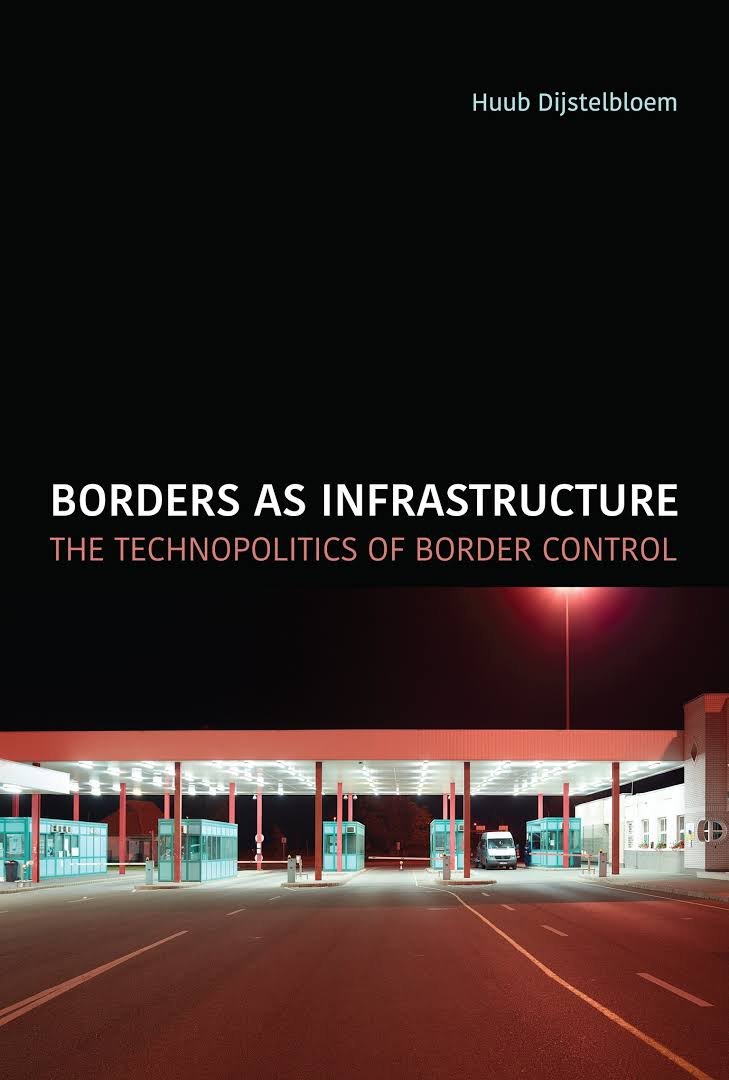
In Borders as Infrastructure, Huub Dijstelbloem brings science and technology studies, as well as the philosophy of technology, to the study of borders and international human mobility. Taking Europe's borders as a point of departure, he shows how borders can transform and multiply and and how they can mark conflicts over international orders.
Dijstelbloem, H. (2021.) Borders as Infrastructure: The Technopolitics of Border Control. MIT Press.
STS-MigTec Circle: Genealogies of containment
This paper begins from the present condition of migrant workers in the district of Foggia, south-eastern Italy, one of the largest agro-industrial enclaves in the country, employing tens of thousands of workers who live and labour in conditions of extreme precarity and exploitation.
Genealogies of containment: migrant labour, bonifica integrale and bio-carceral regimes in an Italian agro-industrial enclave
Irene Peano, Institut of Social Sciences, ICS – University of Lisbon
STS-MigTec Circle: Infrastructures of health and border control
This paper is part of a larger project which considers the position of migrants, refugees and asylum seekers as subjects with health needs, entangled on the one hand in systems of border control and enforcement, and on the other seeking and accessing care within national health systems in Europe. Taking as an entry point the recent (2022) mass reception of Ukrainians fleeing the war in Poland, this paper draws attention to the infrastructural aspects of healthcare and border control, showing how they have come to mesh and intersect.
Infrastructures of health and border control. The case of Ukrainians seeking healthcare in Poland
Karolina Follis (Lancaster University)
STS-MigTec Writing-for-publication Workshop 2022
This Writing-for-publication workshop is organized by the STS MigTec network, with support from the RISK CHANGE research project (2021-2022), which is hosted by the Department of History and Philosophy of Science (HPS), National and Kapodistrian University of Athens (NKUA). The workshop aims at facilitating encounters between Critical Border & Migration Studies and the study of Technology from the perspectives of the humanities and the social sciences (especially Science and Technology Studies and related fields such as History of Technology).
STS-MigTec Circle: Making up the Predictable Border
Over the last two decades, there has been a growing use of predictive technologies to determine who is allowed at the border from visitors to immigrants to asylum seekers. With their credulous pledge to eliminate irregular entries at the border, these novel automated systems appeal to state and non-state actors who justify their use in the name of national security or efficient management of borders.
Making up the Predictable Border
Burcu Baykurt & Alphoncina Lyamuya, University of Massachusetts Amherst, US